Qlik vs Power BI: Choosing the Right Enterprise Analytics Platform with Skybridge Infotech
In today’s data-driven world, enterprises need robust analytics platforms to convert data into actionable insights. Qlik and Power BI are two of the most popular business intelligence platforms, each offering powerful features for enterprise analytics. Choosing the right platform depends on your organization’s needs, data strategy, and scalability requirements. At Skybridge Infotech, we help enterprises evaluate, implement, and optimize analytics platforms to ensure maximum business value and seamless adoption.
While both platforms deliver strong reporting and visualization capabilities, there are significant differences in deployment, architecture, usability, and advanced analytics features. Making an informed choice ensures faster insights, better decision-making, and a scalable analytics environment that supports enterprise-wide digital transformation.
Qlik vs Power BI: Technical Comparison
| Feature/Capability | Qlik | Power BI | Skybridge Infotech Perspective |
| Data Integration | Handles large, complex data sources with in-memory engine | Seamless integration with Microsoft ecosystem (Azure, SQL Server, OneDrive) | Choice depends on existing tech stack and integration needs |
| Ease of Use | Powerful but steeper learning curve for non-technical users | Intuitive interface, ideal for self-service analytics | Power BI often preferred for broader user adoption |
| Visualization | Highly interactive dashboards, associative exploration | Pre-built visuals, extensive marketplace visuals | Both support enterprise-grade dashboards; selection based on complexity |
| AI & Advanced Analytics | Supports predictive analytics via extensions and integrations | Built-in AI capabilities, Azure Cognitive Services integration | Power BI provides faster AI adoption; Qlik offers flexibility with custom models |
| Deployment Options | On-premises, cloud, hybrid | Cloud-first, on-premises via Power BI Report Server | Decision driven by IT infrastructure and governance policies |
| Cost Model | Subscription-based, generally higher for enterprise deployments | Flexible licensing with cost-effective options | Power BI may reduce TCO for Microsoft-centric organizations |
| Governance & Security | Strong role-based access, encryption, compliance support | Enterprise-grade governance, data lineage, row-level security | Both provide enterprise security; alignment with compliance needs is key |
| Scalability | Excellent for large datasets and complex models | Highly scalable, optimized for Microsoft ecosystem | Platform choice impacts long-term scalability and IT overhead |
How Skybridge Infotech Helps Enterprises Choose the Right Platform
- Assessment & Strategy: Analyze existing reporting systems, data sources, and enterprise needs.
- Platform Evaluation: Compare Qlik and Power BI features against organizational requirements.
- Implementation Roadmap: Recommend deployment models, migration paths, and integration strategies.
- Custom Dashboard Development: Build interactive dashboards and reports optimized for end-users.
- Training & Adoption: Enable seamless adoption across departments through training and support.
- Governance & Optimization: Establish security, compliance, and cost-optimization practices.
Key Takeaways
- Power BI is ideal for organizations already in the Microsoft ecosystem, seeking intuitive self-service analytics and AI capabilities.
- Qlik excels in handling large, complex datasets with flexible associative exploration for advanced users.
- Choosing the right platform is not just about features, but alignment with enterprise strategy, scalability, and governance.
- Partnering with Skybridge Infotech ensures your analytics platform is implemented, optimized, and adopted effectively across the enterprise.
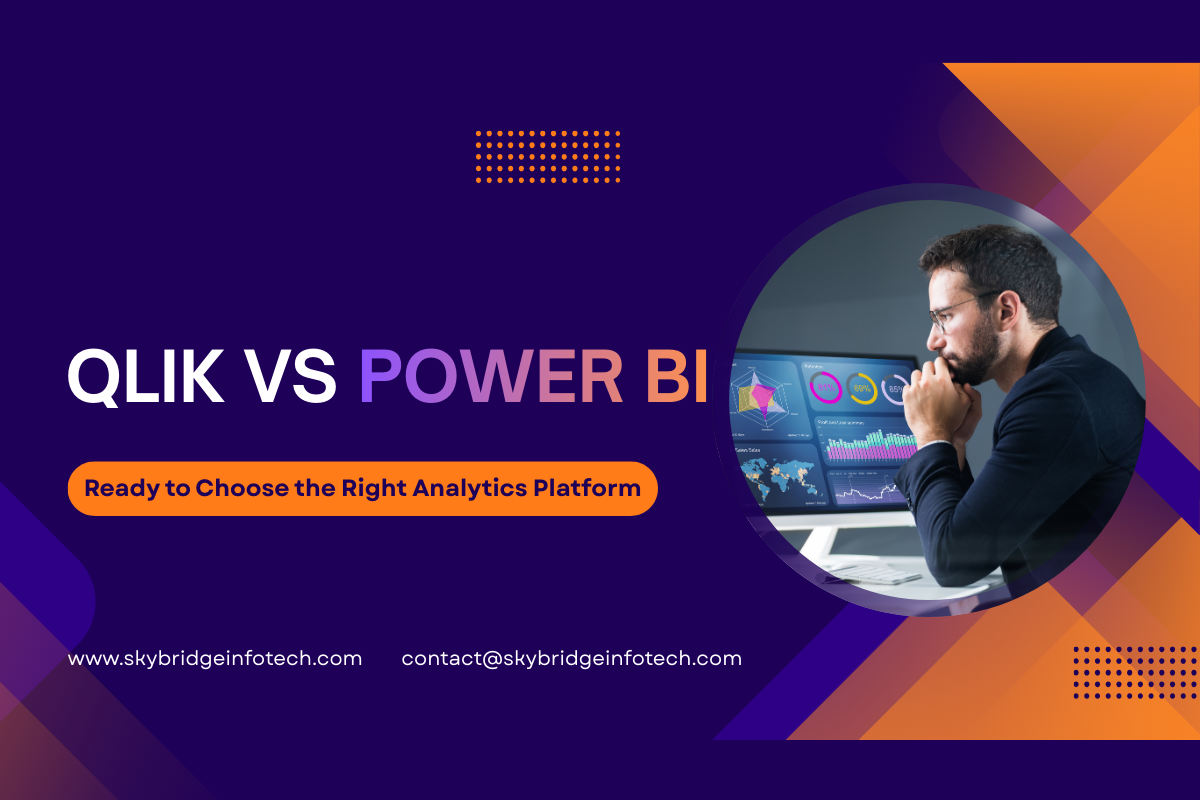
Ready to Choose the Right Analytics Platform?
Skybridge Infotech helps organizations evaluate, implement, and scale enterprise analytics platforms like Qlik and Power BI, ensuring faster insights, lower costs, and better decision-making across the enterprise.