AI Without Disruption: Modernizing Enterprise Operations Through Digital Transformation
Digital transformation does not have to mean chaos. For many enterprises, the idea of integrating AI into daily operations feels overwhelming. Leaders worry about downtime, employee resistance, data risks, and costly mistakes. But modernization does not need to disrupt what already works. With the right strategy and the right partner, AI can quietly strengthen your systems while your business keeps moving forward. That is exactly the approach Skybridge Infotech takes.
In this post, we will explore how enterprises can modernize operations through digital transformation without interrupting performance. You will learn what digital transformation truly means, why it matters for enterprise growth, and how to implement AI in a structured, low-risk way.
What Is Digital Transformation and Why Does It Matter?
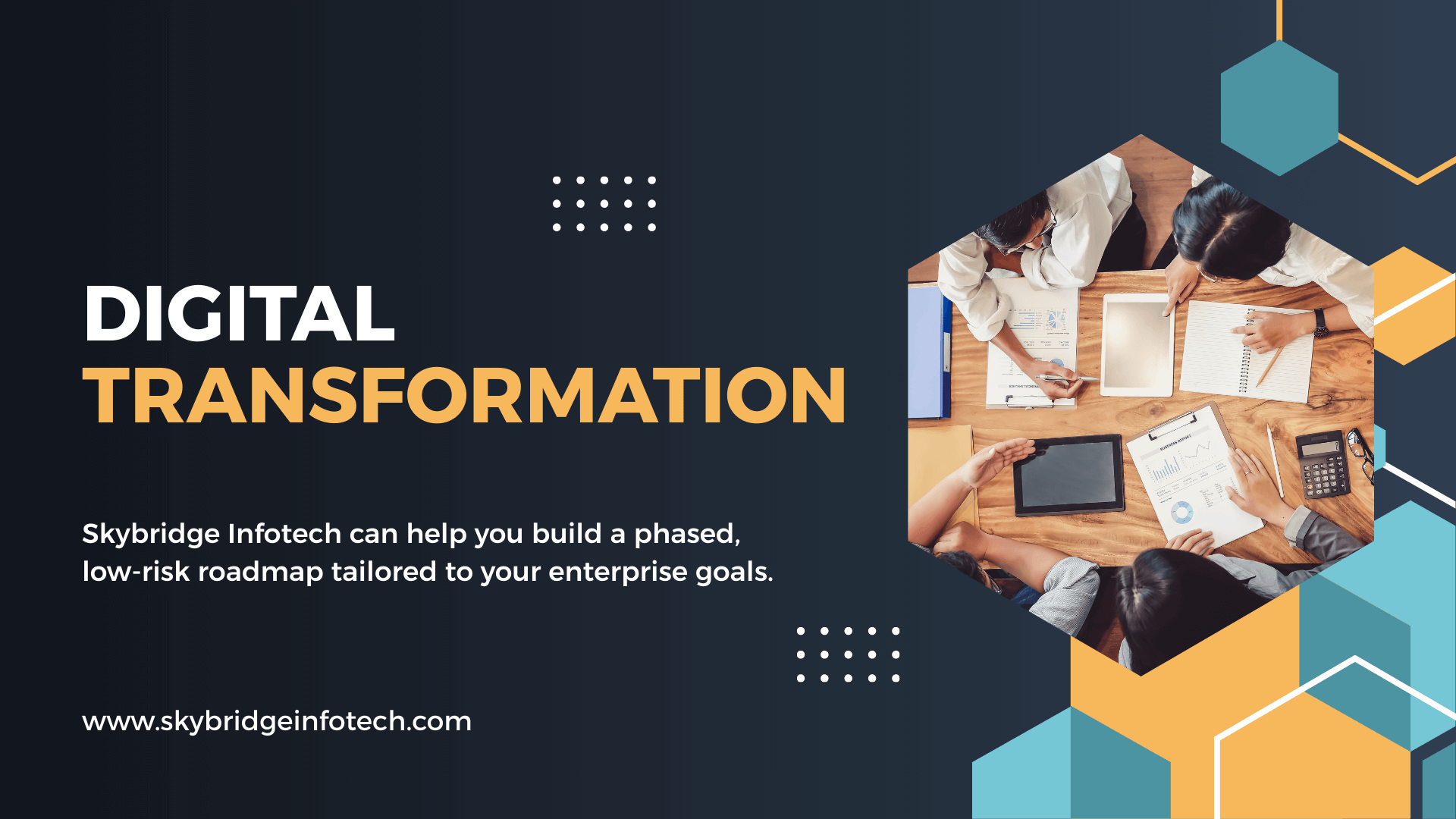
Digital transformation is the process of integrating digital technologies into all areas of a business to improve operations, decision-making, and customer experience. It is not just about adopting new tools. It is about rethinking workflows, data usage, and organizational structure to create long-term efficiency and agility.
For enterprises, digital transformation directly impacts productivity, cost control, and competitiveness. Companies that modernize their operations are better equipped to respond to market changes, automate repetitive tasks, and unlock insights from their data. AI plays a major role in this shift by enabling predictive analytics, intelligent automation, and smarter resource planning.
However, transformation must be intentional. Without a clear roadmap, companies risk overcomplicating systems or disrupting critical processes.
Step 1: Start with Operational Clarity
Before introducing AI or new platforms, enterprises must understand their current workflows. This includes identifying inefficiencies, manual bottlenecks, and data silos. Modern digital transformation begins with clarity, not technology.
Skybridge Infotech works closely with enterprise teams to map existing systems and evaluate performance gaps. This ensures that AI solutions are introduced where they create real impact, not unnecessary complexity.
Step 2: Prioritize High-Impact Use Cases
Not every department needs immediate automation. The key to AI without disruption is focusing on areas that deliver measurable value with minimal risk.
Common high-impact use cases include:
- Automating repetitive administrative tasks
- Enhancing customer support with intelligent chat systems
- Improving forecasting through predictive analytics
- Streamlining supply chain visibility
By starting small and scaling gradually, enterprises reduce operational risk while building internal confidence.
Step 3: Integrate, Do Not Replace
One of the biggest fears around digital transformation is replacing legacy systems entirely. In reality, modernization works best when new technologies integrate with existing infrastructure.
Skybridge Infotech emphasizes compatibility and phased integration. Instead of forcing a full system overhaul, AI tools are layered into current platforms. This preserves business continuity while improving efficiency behind the scenes.
Seamless integration prevents downtime and allows teams to adapt gradually. Employees continue using familiar systems, but with smarter capabilities embedded within them.
Step 4: Build a Data-First Foundation
AI depends on reliable data. Enterprises must ensure their data is clean, accessible, and secure before expanding automation.
Digital transformation includes strengthening data governance, implementing cloud-based storage when necessary, and establishing clear compliance protocols. A strong data foundation reduces errors and ensures AI delivers accurate insights.
Skybridge Infotech helps enterprises design scalable data architectures that support long-term growth without exposing sensitive information.
Step 5: Empower Employees, Do Not Replace Them
Successful digital transformation is not about replacing people. It is about empowering teams to focus on higher-value work.
When AI handles repetitive tasks, employees gain time for strategy, creativity, and customer engagement. Clear communication and training are essential to reduce resistance and increase adoption.
Enterprises that involve employees early in the transformation process experience smoother transitions and stronger outcomes. With proper onboarding and change management, AI becomes a support system rather than a threat.
Step 6: Measure, Optimize, and Scale
Modernization is not a one-time project. It is an ongoing process. After implementing AI solutions, enterprises must continuously monitor performance metrics, evaluate ROI, and refine workflows.
Digital transformation thrives on iteration. By measuring key indicators such as operational efficiency, error reduction, and response times, organizations can identify new opportunities for optimization.
Skybridge Infotech supports long-term scaling strategies that ensure AI evolves alongside business growth.
The Enterprise Advantage of AI Without Disruption
Enterprises that approach digital transformation strategically gain a significant advantage. They modernize operations without risking stability. They increase efficiency without overwhelming teams. They adopt AI without sacrificing control.
The result is a more agile organization that can respond faster to market demands, reduce operational costs, and make smarter decisions based on real-time insights.
Digital transformation is not about dramatic change overnight. It is about steady, intelligent improvement. With expert guidance and a structured roadmap, AI can enhance enterprise performance without interrupting daily operations.