From Reporting to Prediction: The Role of AI in Digital Transformation Analytics
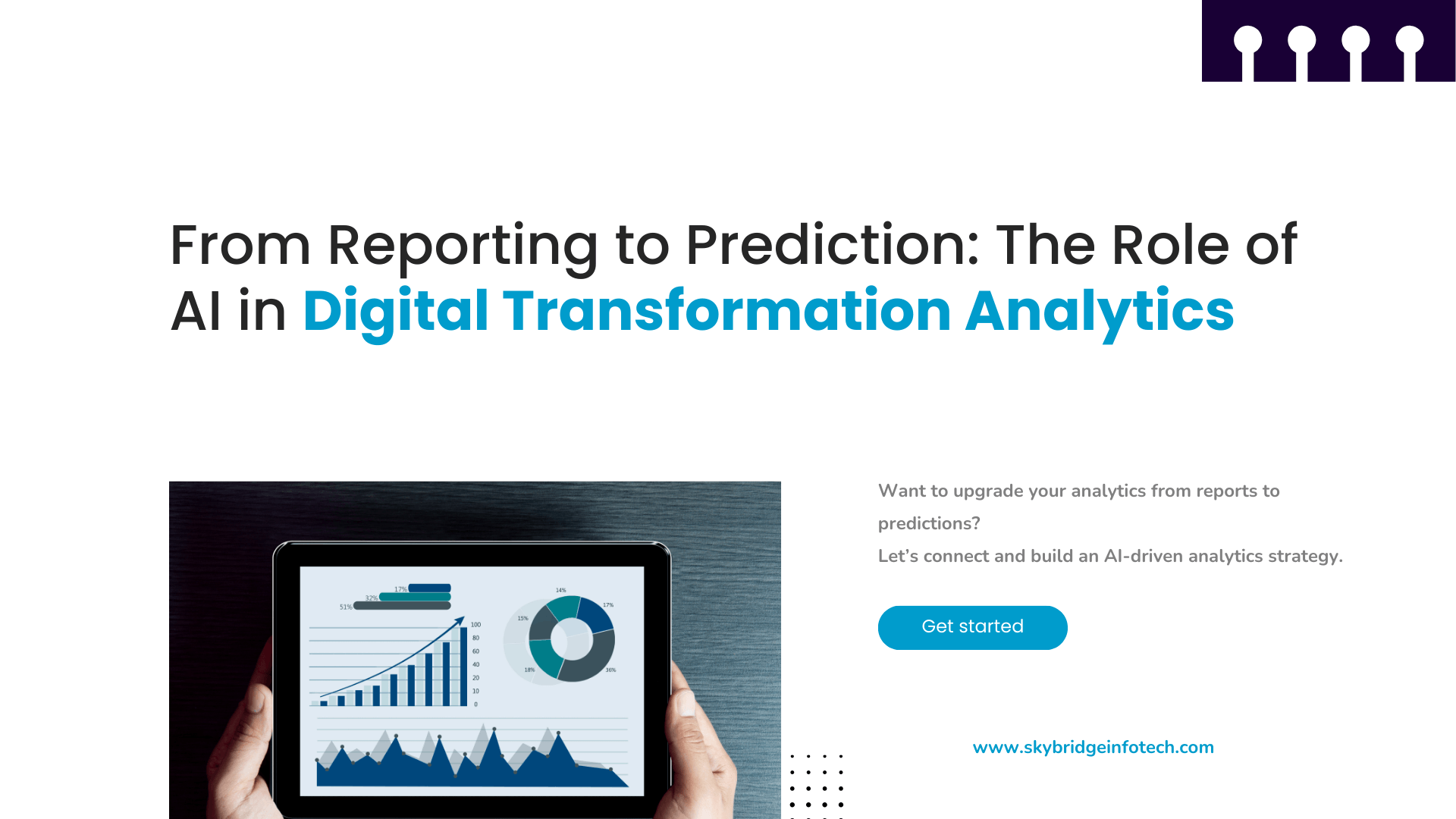
For many organizations, analytics started with reports — monthly summaries, KPI dashboards, and performance charts. These reports helped leaders understand historical performance, but they often arrived too late to influence outcomes. By the time insights were reviewed, the opportunity to act had already passed.
Today, AI-powered analytics is transforming this model. Instead of only describing the past, modern analytics platforms can predict trends, detect risks early, and recommend next-best actions. This shift from reporting to prediction is becoming a core pillar of digital transformation.
The Traditional Reporting Model
Traditional analytics focuses on structured data and predefined metrics. Reports are usually:
- Historical in nature
- Generated on schedules
- Based on fixed queries
- Dependent on analyst interpretation
- Reactive rather than proactive
This model answers questions like:
- What were last month’s sales?
- Which campaign performed best?
- How many tickets were closed?
While useful, reporting alone cannot guide fast-changing digital businesses.
The AI-Driven Predictive Model
AI-enhanced analytics adds machine learning, pattern recognition, and statistical modeling to data pipelines. Instead of just summarizing results, systems learn from data and generate forward-looking insights.
Predictive analytics can:
- Forecast demand and revenue
- Predict customer churn
- Identify fraud or anomalies early
- Recommend next-best offers
- Anticipate operational failures
- Optimize resource allocation
The analytics layer becomes a decision-support engine rather than a reporting function.
Core Differences: Reporting vs Predictive AI Analytics
Time Orientation
Reporting Analytics
- Looks backward
- Focused on historical performance
- Post-event analysis
Predictive AI Analytics
- Looks forward
- Forecasts outcomes
- Pre-event alerts and projections
Insight Generation
Reporting Analytics
- Human-driven interpretation
- Static metrics
- Predefined KPIs
Predictive AI Analytics
- Model-driven insight generation
- Dynamic pattern detection
- Emerging signal discovery
Speed of Action
Reporting Analytics
- Slower response cycles
- Manual review required
- Decision lag is common
Predictive AI Analytics
- Near real-time predictions
- Automated triggers
- Faster operational decisions
Business Impact
Reporting Analytics
- Performance visibility
- Compliance and tracking
- Descriptive value
Predictive AI Analytics
- Risk reduction
- Revenue optimization
- Proactive decision advantage
User Experience
Reporting Analytics
- Dashboard-centric
- Analyst-dependent
- Requires query knowledge
Predictive AI Analytics
- AI-assisted insights
- Natural language queries
- Embedded recommendations
How AI Strengthens Digital Transformation Analytics
AI doesn’t replace analytics — it expands it. In digital transformation programs, AI-enhanced analytics enables:
- Continuous forecasting instead of periodic reporting
- Automated anomaly detection
- Scenario simulation and modeling
- Self-updating predictive models
- Intelligent alerting systems
- Prescriptive recommendations
This makes analytics operational, not just informational.
Practical Use Cases Across Functions
Marketing
- Campaign response prediction
- Customer lifetime value forecasting
- Personalization scoring
Sales
- Deal closure probability
- Pipeline risk prediction
- Territory performance forecasting
Operations
- Demand forecasting
- Predictive maintenance
- Capacity planning
Finance
- Cash flow prediction
- Risk modeling
- Fraud detection
Implementation Matters More Than Tools
Many organizations buy advanced analytics tools but still operate in reporting mode. The missing elements are:
- Clean, integrated data foundations
- AI-ready data pipelines
- Model governance
- Business-aligned use cases
- Embedded analytics workflows
- User adoption planning
Without these, predictive analytics remains underused.
How Skybridge Infotech Enables Predictive Analytics Transformation
Skybridge Infotech supports enterprises in upgrading analytics maturity from reporting to prediction by focusing on:
- AI-enabled analytics architecture
- Predictive model integration
- Modern BI and data platforms
- Embedded analytics design
- Governance and model lifecycle management
- Business KPI–driven AI use cases
The goal is not just smarter dashboards — but smarter decisions.
Final Takeaway
Reporting tells you where you’ve been. Predictive AI analytics tells you where you’re going — and what to do next. Organizations that adopt predictive analytics as part of their digital transformation strategy gain earlier signals, faster responses, and stronger competitive positioning.