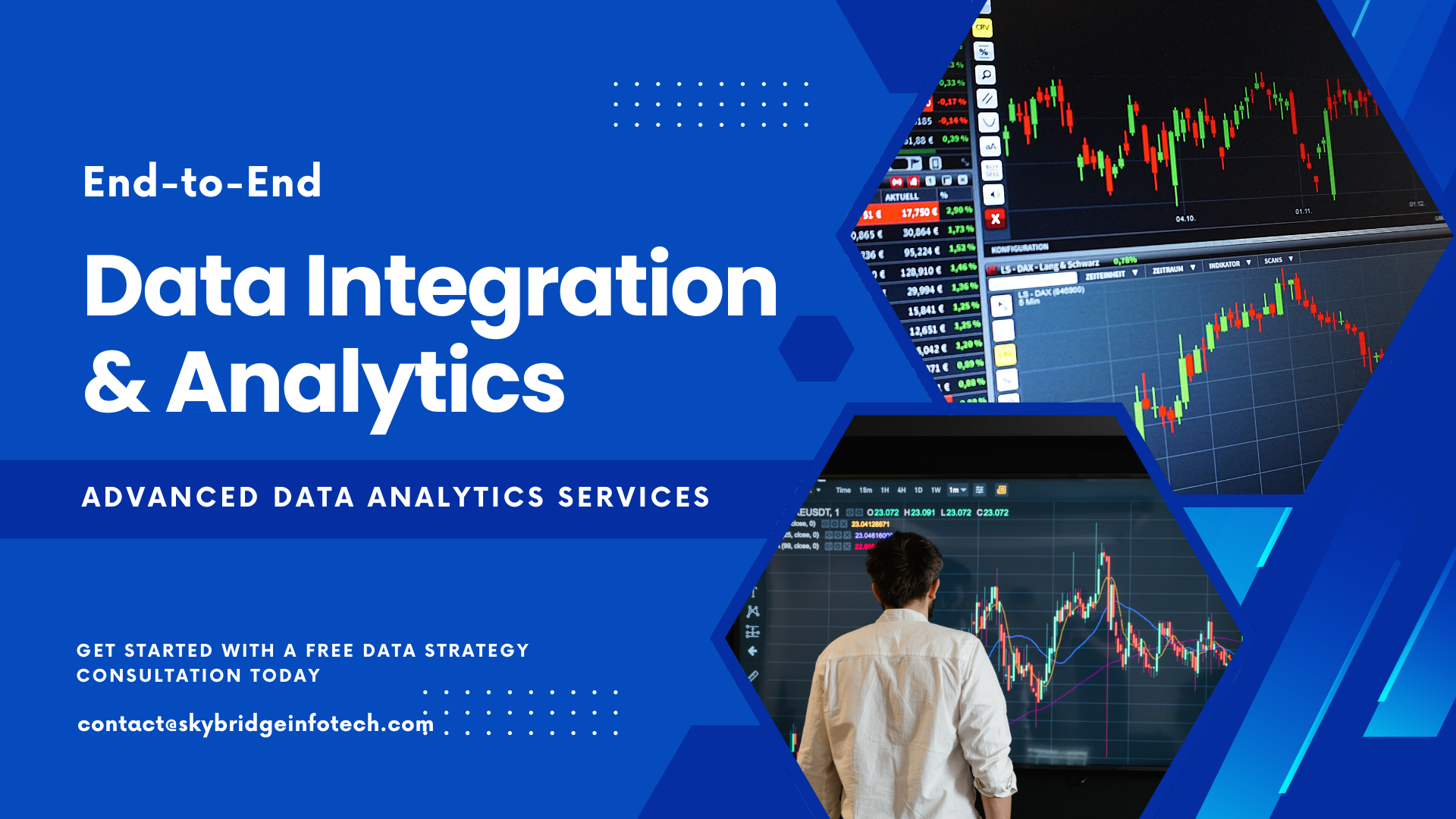
End-to-End Data Integration and Analytics for Enterprises
Data is everywhere. It flows through CRMs, ERPs, marketing platforms, cloud apps, and internal systems. Yet for many enterprises, this data lives in silos. Teams struggle to connect insights. Leaders make decisions based on partial information. Growth slows down.
End-to-end data integration and analytics solutions solve this problem. They bring together data from multiple sources, clean and transform it, and turn it into clear, actionable insights. For enterprises, this is not just a technical upgrade. It is a strategic shift.
We will explain what end-to-end data integration and analytics mean, why they matter for modern enterprises, how the process works, and how Skybridge Infotech helps businesses unlock real value from their data.
What is End-to-End Data Integration and Analytics?
End-to-end data integration and analytics is a comprehensive approach to collecting, combining, processing, analyzing, and visualizing data across the entire organization. It covers the full data lifecycle — from raw data ingestion to advanced analytics and reporting.
Instead of working with disconnected dashboards or manual spreadsheets, enterprises use centralized data pipelines and modern analytics platforms. This ensures that data from finance, sales, operations, supply chain, and customer support all work together.
The result is a single source of truth that supports smarter, faster decision-making.
Why It Matters for Enterprises
Enterprises operate in complex environments. They manage thousands of transactions, customers, and processes every day. Without integrated data systems, teams waste time reconciling numbers and validating reports.
End-to-end data integration improves:
- Data accuracy and consistency
- Operational efficiency
- Real-time visibility
- Strategic planning
- Customer experience
When executives have access to reliable, unified data, they can identify trends earlier. Marketing teams can personalize campaigns. Operations teams can optimize supply chains. Finance teams can forecast with confidence.
In short, integrated analytics transforms data from a cost center into a competitive advantage.
How End-to-End Data Integration Works
1. Data Collection and Ingestion
The first step is gathering data from multiple internal and external sources. This may include databases, cloud applications, APIs, IoT devices, and legacy systems. Modern integration tools automate this process, ensuring continuous and secure data flow.
2. Data Cleaning and Transformation
Raw data is rarely ready for analysis. It may contain duplicates, inconsistencies, or missing values. During this stage, data is cleaned, standardized, and transformed into a structured format. This ensures accuracy and usability.
3. Data Warehousing or Lake Implementation
Once prepared, data is stored in a centralized repository such as a data warehouse or data lake. This environment allows enterprises to manage large volumes of structured and unstructured data efficiently.
4. Analytics and Business Intelligence
With centralized data in place, analytics tools generate dashboards, reports, and predictive models. Decision-makers gain insights into performance metrics, KPIs, and emerging trends. Advanced analytics can even support machine learning and AI-driven forecasting.
5. Continuous Monitoring and Optimization
Data integration is not a one-time project. Enterprises need ongoing monitoring, governance, and optimization to maintain quality and security. This ensures long-term scalability and compliance.
Common Challenges Enterprises Face
Despite the clear benefits, many organizations struggle with implementation. Common challenges include:
- Legacy systems that do not integrate easily
- Data silos across departments
- Poor data governance
- Security and compliance concerns
- Lack of in-house expertise
Without the right strategy, data initiatives can become expensive and fragmented. That is why partnering with experienced technology providers is critical.
How Skybridge Infotech Delivers Value
Skybridge Infotech specializes in delivering end-to-end data integration and analytics solutions tailored for enterprises. Their approach is practical, scalable, and aligned with business objectives.
First, they assess the existing data landscape. This includes identifying gaps, inefficiencies, and integration bottlenecks. Instead of applying generic solutions, they design customized data architectures based on the organization’s goals.
Second, Skybridge Infotech implements modern data pipelines and cloud-based infrastructures that ensure secure and real-time data processing. Whether it is migrating to a cloud data warehouse or building advanced analytics dashboards, the focus remains on clarity and performance.
Third, they prioritize governance and compliance. Enterprises operate under strict regulatory requirements. Skybridge ensures data security, access control, and audit readiness at every stage.
Most importantly, they translate technical solutions into measurable business outcomes. Increased reporting speed. Reduced operational costs. Better forecasting accuracy. Improved customer insights. These are the real results enterprises care about.
The Strategic Advantage of Unified Analytics
In today’s digital economy, enterprises that master their data outperform those that do not. Integrated analytics enables faster innovation, better risk management, and smarter investments. Instead of reacting to problems, leaders can anticipate them. Instead of guessing, they can act with evidence.
End-to-end data integration and analytics solutions are no longer optional. They are foundational to enterprise growth. With the right strategy and the right partner like Skybridge Infotech, organizations can turn complex data ecosystems into powerful engines of insight and performance.
Ready to transform your enterprise data into a strategic asset?
The journey starts with integration, clarity, and a long-term vision for analytics excellence.