
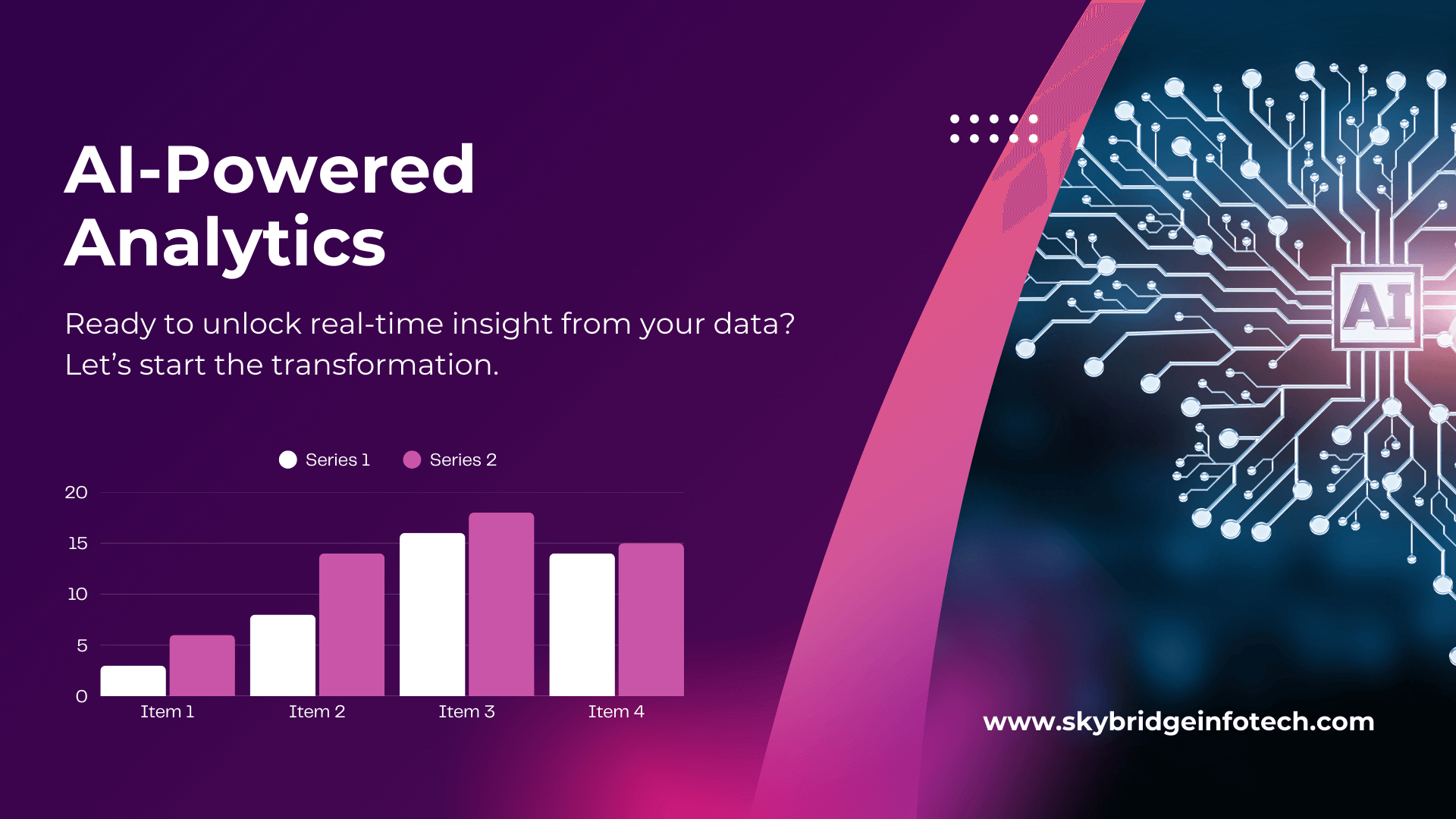
AI-Powered Analytics for Digital Transformation: Turning Raw Data into Real-Time Decisions
Digital transformation is no longer just about moving systems to the cloud or automating workflows — it’s about making smarter, faster decisions powered by data. Every organization today generates massive volumes of raw data from applications, customers, operations, devices, and digital platforms. But raw data alone has little value unless it can be translated into meaningful, real-time insights. That’s where AI-powered analytics changes the game.
AI-driven analytics platforms help organizations move beyond static reports and delayed dashboards toward predictive, adaptive, and real-time decision intelligence. Instead of asking “What happened last month?”, leaders can now ask “What is happening now?” and even “What is likely to happen next?”
The Shift from Traditional Analytics to AI-Powered Intelligence
Traditional business intelligence systems rely heavily on historical data, predefined queries, and manual interpretation. While useful, they often fall short in fast-moving digital environments where decisions must be made instantly.
AI-powered analytics enhances this model by combining:
- Machine learning algorithms
- Automated data processing
- Pattern recognition
- Predictive modeling
- Natural language querying
- Real-time streaming analytics
This allows systems to automatically detect trends, anomalies, and opportunities without waiting for analysts to manually uncover them.
The result: faster insights, fewer blind spots, and more confident decision-making.
Why Raw Data Needs AI to Become Actionable
Organizations often struggle with:
- Data silos across departments
- High data volume and velocity
- Unstructured data formats
- Delayed reporting cycles
- Manual analysis bottlenecks
AI helps solve these challenges by automatically cleaning, classifying, and correlating data from multiple sources. It can process structured and unstructured data — including text, logs, customer interactions, and sensor feeds — and convert them into usable intelligence streams.
Instead of spending weeks preparing data, teams can start acting on insights almost immediately.
Real-Time Decision Making: The Core Advantage
Real-time AI analytics enables continuous decision support rather than periodic reporting. This capability is especially critical in digital-first enterprises.
Key real-time use cases include:
Customer Experience Optimization
- Personalized recommendations
- Dynamic pricing
- Real-time engagement scoring
- Churn prediction and prevention
Operational Intelligence
- Predictive maintenance
- Supply chain risk alerts
- Demand forecasting
- Process bottleneck detection
Risk & Security Monitoring
- Fraud detection
- Behavioral anomaly alerts
- Threat pattern recognition
- Compliance monitoring
With AI models constantly learning from new data, insights improve over time — making decisions not just faster, but smarter.
AI Analytics Across the Digital Transformation Journey
AI-powered analytics supports every stage of digital transformation:
Strategy Layer
AI identifies market patterns, customer behavior trends, and competitive signals to guide strategic planning.
Operations Layer
Intelligent analytics optimizes workflows, resource allocation, and performance metrics across departments.
Experience Layer
Real-time personalization engines tailor digital experiences across web, mobile, and commerce platforms.
Innovation Layer
Predictive insights reveal new product opportunities, service gaps, and emerging customer needs.
From Dashboards to Decision Intelligence
Modern AI analytics platforms go beyond dashboards. They deliver decision intelligence — systems that not only show insights but also recommend actions.
Examples include:
- Suggested next-best actions for sales teams
- Automated campaign adjustments
- Smart inventory reorder triggers
- AI-driven resource scheduling
Some platforms even support conversational analytics, where users can ask questions in natural language and receive instant visual and narrative insights.
Implementation Best Practices
To successfully deploy AI-powered analytics, organizations should focus on:
- Strong data governance frameworks
- Integrated data architecture
- Cloud-scale data platforms
- Cross-functional analytics adoption
- Continuous model monitoring and tuning
- Clear KPI alignment with business outcomes
Technology alone is not enough — change management and user adoption are equally critical.
The Competitive Advantage of AI-Powered Analytics
Companies that leverage AI analytics effectively gain measurable advantages:
- Faster decision cycles
- Reduced operational risk
- Improved customer targeting
- Higher revenue efficiency
- Better forecasting accuracy
- Stronger competitive positioning
In digital markets where timing and precision matter, real-time AI insights can be the difference between leading and lagging.
Final Thoughts
AI-powered analytics is transforming how organizations convert raw data into real-time decisions. It replaces delayed hindsight with proactive foresight and turns fragmented information into continuous intelligence. As digital transformation accelerates, enterprises that embed AI into their analytics stack will be better equipped to respond, adapt, and grow.